


DOES THE MARKET REALLY UNDERSTAND GAY?
Cinema in India, kitschy for most, emotionally overwrought for many others, sometimes pats itself on the back for taking on the contentious issues of the times. Terrorism has been tackled as charged erotic drama; honor killings suitably poeticized; the recent Commonwealth Games imbroglio will find some self-styled guerilla film-makers out there—then there is this perception that gays have been ‘liberated’ because of that much tom-tommed Section 377 ruling last year. (Incidentally, it is still pending appeal in the Supreme Court having now assembled a pack of religious types as opponents to the motion; but that’s just a niggling detail.) There is a sense that people want to float suspended in a bubble, reveling in its iridescence. It’s like Mr Clooney, sexiest man alive, talking of how Hollywood paved the way for civil rights by giving an Oscar to Hattie McDaniel for playing a southern mammie in Gone With The Wind. Well, she sat at the back of the room and wasn’t even allowed her own speech. It doesn’t really matter what the reality on the ground is. Change is a bewitching concept even if it is entirely superficial.
The queer discourse in India has always been a creature of the subtext. We drew succor from the homo-erotic buddy films, or the vamps coded as ‘lesbians’ (read Lalita Pawar), sissies paraded out as objects of ridicule (to this day, if Mr Johar continues in his spiel). It seems that that gangly beast has now been taken by the hand and thrust into the spotlight as the film world latches on to this bandwagon. The Big Gay Theme is dealt with without necessarily having the sensibility or the sensitivity to provide these hidden stories the kind of airing that they rightfully deserve. We have these examples before us, many so-called gay films have been announced and filmed in quick succession in India this year, and then we have the cinemas of the world, and the struggles undertaken in those universes and the fruits of labor that have been borne over time in those cultures. Indeed, at the Mumbai Film Festival, there promises to be a confluence of these sensibilities.
Let’s look around at the pretenders and the worthies, alike. We’ve had the dreamily shot Pankh earlier in the year, about a boy forced to play female parts as a child, which results in a tale of gender dysphoria and sexual confusion that almost seems to inflect gay identity with a pathology that it’s trying very hard to shirk off in a land of sensational rumors. So that film was two steps backwards. Being gay was an existential hell that its leading man was trying very hard to extricate himself from. More recently, Dunno Y… Na Jaane Kyun, dubbed the Indian Brokeback Mountain, seems to have missed the boat, and not because of its central gay love story, which to all accounts, has been shot both brazenly and delicately. It’s because it is a project that’s mired in immutable mediocrity. It’s because a ‘tainted’ film doesn’t attract the best writers or the best technicians, or even saleable A-list leads; no offense to the ageing living legends who are a part of the line-up. Actors like Randeep Hooda routinely turn down directors of the calibre of Mira Nair because they can’t see themselves play ‘gay’, because possibly it’s an affliction that seems to outlive even the dimming of the arclights. The stereotypes don’t represent anyone. The secret’s in the sauce, in the stories, not in a superficial sleight-of-hand that’ll look so awfully bad in an actor’s resumé.
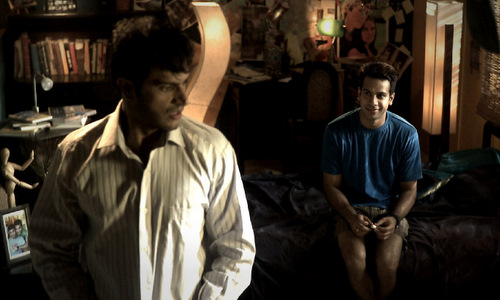
We do have more worthy endeavors, like a short film, Amen, by Judhajit Bagchi and Ranadeep Bhattacharyya, that’s slowly doing the rounds, in which two young straight actors throw themselves almost enterprisingly into a cathartic little tale that seems packed to the point of clutter, with so many pertinent issues to the minute, because the state of the gay is a cauldron of a similar kind. The nudity is just incidental. Repression is a ticking time-bomb. Onir’s I Am has a segment on the entrapment of gay men. There is a reason why these films are shorts. Onir’s film has been funded by the miracle of social networking. It’s owned by thousands of its patrons. Funding dries up when you walk up with an alternative script. Deepti Naval’s new film explores the friendship of a gay man and a prostitute. No one can remember the name of the film even if they’ve heard a fleeting mention somewhere. For the record, it’s Do Paise Ki Dhoop, Chaar Aane Ki Baarish. Sometimes you long for the subtext of yore. For that, you have this year’s visceral human document, Vihir, in which a young boy mourns the death of a friend, to whom he had seemed irrevocably bound. It’s a film that’s oddly, beautifully, queer resonant. We’re grasping at straws, queer cinema hasn’t come of age in India. There is no new demographic that’s being catered to, the cashing-in on these new themes seems to have fallen flat on its face. For real change we have to look elsewhere, into the world, where cinema with real political notions, still appears to thrive.
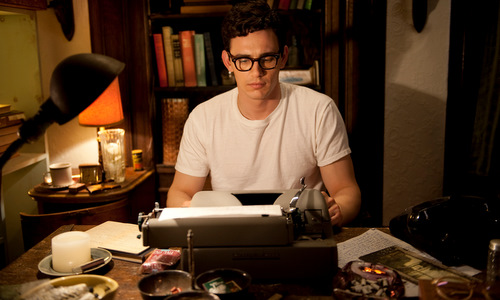
Hollywood. Always unabashedly mainstream, but independent cinema there has acquired some muscle of late. Stars like James Franco get their acting fillup by performing in gay-themed films, like Milk, or this year’s Howl in which he chews upon the part of the mercurial Allen Ginsberg with some relish. The comedy hit The Kids are All Right features two acclaimed actresses, Julianne Moore and Annette Bening, as a lesbian couple who’ve tracked down the father of their children (conceived via IVT). These are mainstream projects with box-office appeal, generating the revenues expected of them, a far cry from half a decade ago, when Brokeback Mountain opened in just ten theatres and was publicized with a large poster of Anne Hathaway, child in hand, and a beaming Jake Gyllenhaal standing beside her like a family man. No-one knew he was a gay cowboy then. That was a strange year, in which a film that had won the most precursors in history was denied Best Picture at the Oscars by a tribe of ‘heffalumps’, as described by its writer Annie Proulx. It cannot be denied though, that this particular industry, mainstream as it is, seeks to correct its historical wrongs, as can be seen by the profusion of black actors nominated for acting awards over the last decade, choices that seem decided by merit, and not affirmative action. In India, even the women-centric film is considered a taboo because as the mantra goes, perception is everything, and the masses are not ready to being jolted from their stupor. The powers-that-be hate the phrase ‘pushing the envelope’ with a vengeance.

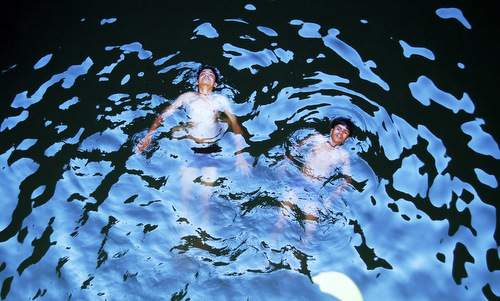
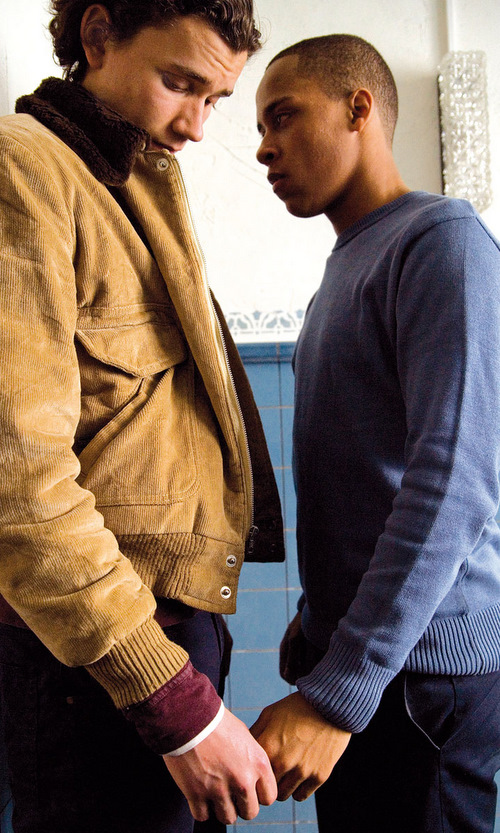
Sometimes you long for the profound, for something wistful, for a stay to the chaos. The beautiful Shahada, surprise winner of a jury award at the Berlinale, talks of a gay man reconciling the stringency of his faith with the growing intimacy he shares with a man he’s slowly falling in love with. Love is spoken of in long shadows, and stolen glances, in wordlessness. People complain of not wanting to know what goes on in someone’s bedroom. These stories are not bedroom tales, they are living breathing things, out in the open. There is a grace and elegance to struggle, and conflicted heroines and men make for the most compelling drama. The stories of the closet will continue unabated because this land takes no prisoners, and the future seems to forever threaten to arrive in a burst of sensationalism, but only just. Sometimes there will be that pause in the proceedings each time a moment of real intimacy, of authentic emotion, is flashed overhead. It’ll be a celluloid moment worth savoring.
This article originally appeared in the MAMI Mumbai International Film Festival catalogue.


Comments