


 PROFILE: Farooque Shaikh
THE MAN WHO COULD SAY ‘NO’
Last month I sent Farooque Shaikh an impulsive message after watching his latest release Listen Amaya for the second time. It was an uncharacteristic gesture and the idea was merely to compliment his work. Most actors don’t respond to smses from strangers. He did so within minutes––a warm and courteous one in his unique shorthand which I gradually learnt to decipher. Actors also don’t grant interviews to small-time journalists who run obscure websites that few people read (especially if they themselves are technologically challenged and don’t even know how to switch on a computer). Yet I found myself at his house this week and ended up falling in love with the man after a two-and-a-half hour marathon chat about everything and nothing.
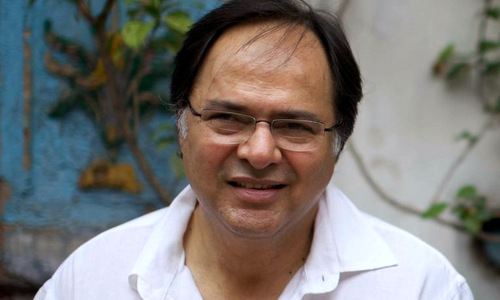
Sometimes even as you delight in an artiste’s oeuvre, you take him for granted. Despite unreserved admiration for his best work––Garm Hawa, Gaman, Chashme Buddoor, Bazaar, Umrao Jaan, Katha and more recently Shanghai and Listen Amaya (the film’s flaws notwithstanding)––I never went into raptures over Farooque Shaikh the same way I was enamoured by Naseeruddin Shah, the flamboyant king of art cinema. But Shaikh was my favourite guy-next-door, the gentle, cheerful foil to Shah’s passionately angry young man. And of course Sai Paranjpe had to mix them up to delightful effect in Katha where Shah is still angry, but mainly because he’s naïve to a fault, while Shaikh is wise and endearing despite his rakishness.
Watching this handsome childhood hero in Listen Amaya had an unsettling effect. Not just because he’s aged (in person he also jokes about his ‘well-rounded’ figure and how he doesn’t dare to watch the film)––perhaps our desire to keep our screen idols forever young manifests an inability to accept the truth of our own ageing and mortality, bare but morbid facts of life that no amount of cosmetic intervention can camouflage.
In Amaya he plays an Alzheimer’s patient gradually losing his grip on life and towards the end we see him standing at a traffic light looking confused and helpless, the camera circling him almost like the hands of time. The film speaks of memory and forgetting, holding on and letting go and somehow, in that instant, the lines between fiction and reality blurred in my consciousness.
Confusing an actor’s screen persona for who he is off-camera is highly problematic. When you harbour great expectations of people or foist extraordinary qualities on them, they are bound to disappoint, chiefly because the picture in your head is unrealistic to begin with. Yet on meeting Shaikh I intuit an aspect of Jayant––someone who’d shoot a portfolio for a building security guard to make him feel like a hero but wouldn’t fight his own destiny to get what he wants.
His apartment is as modest as you can possibly imagine. No frills or the slightest hint of showiness. Somewhere inside I hear a dog bark with excitement. It's a stray his daughter picked off the street and brought home. "We don't have the dog, the dog has us," he says with typical irreverence. The same tone extends to vivid descriptions of how he cringes when he watches himself on screen in say, Umrao Jaan––“I look like a halwai’s son”.
I laugh at this self-deprecation before realising I’ve come up against an actor who just won’t take a compliment, a first in my career and an absolute gold standard for character. With most others you can sense the gratification behind the widening smile, shrug of the shoulder or approving twinkle in the eye––and these are the subtle ones. “Nobody tells the truth to your face. There are things that have to be wrong with your work and things which should have been better. I prefer that people give me constructive criticism instead of unambiguous praise.”
Over a career spanning 40 years (Garm Hawa released in 1973) Shaikh has acted in just about 35 films––“if I’d done any more the audience would have seen through me”. At least half of his output has been indifferent or in some cases, rank bad (the films themselves and not necessarily his work in them, although a recent mega blooper called Accident On Hill Road defies all classification). But all things considered and particularly the times we live in, his report card doesn’t read too badly and his best work has been in quality cinema.
In a business plagued with insecurity, Shaikh has never worried about being out of work. And longevity is only a function of how much you can put up with. "The film industry is a place where if they need you, they’ll dig you out of your grave for one last shot. And if they don’t, you could be dying under their noses and they wouldn’t know. I'd rather sleep well at night than agonise about these things because I know enough about the transience of fame and how even the best of men have succumbed to temptation."
After the biggest hit of his career, Noorie, which ran for 29 weeks and propelled him to stardom of the kind that literally opens up the floodgates, instead of swirling in self-importance Shaikh sat at home doing nothing (his favourite pastime) for two years before Paranjpe offered him Chashme Buddoor. “I’d have perhaps embraced the stardom if I was happy about my work in Noorie.” Or maybe not even then, because he was trained to stay grounded. “Fortunately I worked with directors who weren’t interested in the theatrics. If I ever tried to show off my skills, M S Sathyu, Satyajit Ray or Sai would have immediately admonished me and told me to please just go and perform the character instead.”
There's a touch of fatalism to this pragmatism (which again connects with Jayant)––“I somehow believed I’d get my due”. Or is it that he chose to be content with what he got? He speaks of stepping back and taking stock, of long breaks when he lazes about reading books––I am astonished by the variety of references he quotes, from Ghalib and Kabir to Marlon Brando and Alexander via Lincoln and the American Civil War––eating to his heart’s content (he’s a self-confessed foodie) or doing whatever else catches his fancy. He calls it ‘refuelling’, a vital process of rejuvenation that most artistes are too afraid to undertake for fear of being forgotten in the meantime.
“It’s impossible for actors to go from one role to the next without recharging their batteries with life lived outside of the make-believe. You may use glycerine instead of crying real tears because there’s only so much emotion you can expend at any given time. But ultimately the difference shows. As Faiz writes, creativity is like a tape spool. When the tape runs out, an artiste should stop. Instead we keep rewinding and playing it over and over again.”
He's beginning to sound idealistic in an unreal way––perhaps IPTA got rubbed in too deep under his skin or skepticism is getting the better of me. It brings to mind a character from Rituparno Ghosh’s superb Bengali film Dahan––the grandmother of one of the protagonists, a school teacher who takes on a bunch of hooligans molesting a woman outside a metro station. Jhinuk, the girl who intervenes and goes to the police to file a FIR is widely applauded for her grit. The grandmother questions this excessive praise ascribing it to the general dilution of human values––what should have been a natural response from anyone who witnessed the incident is now elevated to an act of unnatural courage because only she followed her conscience.
So if Shaikh wonders why actors should do ad films and peddle things they don’t even use in their own lives, or how a person’s worth can be measured by the brand of car he drives and number of houses he owns, or refuses to work unless he’s convinced about the merit of a project––a friend who was a senior honcho at a television channel recounts how he rejected an offer to judge a reality show for a sum of money that would’ve made almost anyone take a long pause and ultimately pacify their inner voice––perhaps he’s merely stating the truth that everyone else has obfuscated in the line of progress.
When I leave (he comes down to drop me to my car and won’t turn back till it’s out of the gate) I'm elated not merely for having met an actor whose work I cherish. And surely he isn’t perfect. Nobody is. But it’s a rare pleasure to find someone who cares as little about the trappings of the world and can readily laugh at its follies. Like Saath Saath's Avinash shed his bitterness but miraculously retained the idealism of youth into his '60s.
It fills my heart with hope. And for that I’m grateful to him.


"Actors also don’t grant interviews to small-time journalists who run obscure websites that few people read". Apparently Mr. Sheikh's sense of self deprecation has rubbed on to you. But its refreshing to find that people such as Mr. Sheikh still exist, and there are others who are writing about them. Very recently, i was searching for stuff to read online about Mr. Sheikh but could not find much. Thanks for filling the void.
Posted by: Harsh | Apr 18, 2013 at 22:53
So beautifully written. Deepa, you have a gift.
Bella
Posted by: bella | Mar 12, 2013 at 22:48
Awesome article, felt as if i was seeing the interview with my own eyes. Too Good !
Posted by: abhishek singh | Mar 12, 2013 at 02:11
Wow...wonderful writing about a wonderful actor. You have described him so well, as mentioned earlier, love your style of writing.
Posted by: Bijal Shah | Mar 08, 2013 at 19:29
That Farooq Shaikh is as real & success/publicity less-driven I had surmised even without personally knowing the man. That he is the most versatile actor of his generation & club of actors (read naseer, shabana, smita, om, deepti....)I always believed. He could trapeze through a gamut of portrayals from light-heartedness...to cockiness...to romance...to drama..to rakish-roguishness...with far more skill than his contemporaries. Deepa's 'chat' is as pleasant as the actor's characters.
Posted by: aparajita krishna | Mar 08, 2013 at 10:45