


 REVIEW: The Coffin Maker
THE PHOENIX RISES
If you’ve watched Naseeruddin Shah extensively on stage and screen it may be hard to fathom why this exceptional talent (honestly, I don’t have the vocabulary to qualify it beyond clichés) is squandering his reputation on embarrassing fare like Chaalis Chauraasi, Maximum, Sona Spa, etc. Of late, even in middling films (The Dirty Picture, 7 Khoon Maaf and That Girl In Yellow Boots) his presence has been unremarkable, mechanical. What happened to that maverick who’d incarnate equally evocatively, the inflexible blind principal of Sparsh, the eccentric Parsi in Pestonjee, or the desperate fugitive of Paar—a film I watched in my childhood and still can’t erase the memory of his emaciated body herding pigs across a treacherous river? Shah could be intense, angry, subdued, witty, and dominate scenes without affectation, routinely stealing a march on everyone around. Like he did in Zoya Akhtar’s posh fantasy Zindagi Na Milegi Dobara in a five-minute cameo that injected the otherwise soulless wonder of excess with a dash of genuine emotion.
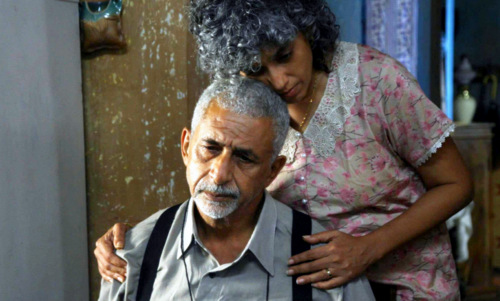
In writer-director Veena Bakshi’s debut film, The Coffin Maker, Naseeruddin Shah rises from the ashes as Anton Gomes (the Chekhovian connection is purely intentional), the beedi-smoking, chess-playing tragic protagonist. A Goan carpenter forced to make coffins for a living, he’s embittered by life and determined to sulk and rant at everyone around, but especially at his wife Isabella (Ratna Pathak-Shah, always, always stirring), herself nursing a lifelong migraine and forlorn expression, and son Joseph (Anand Tiwari) who the father considers a good-for-nothing but still wants to protect from his dreadful profession.
The film unfolds like a fable with a drunk narrator (Amit Sial) leading us into Anton’s dimly lit (artistically done by cinematographer Mahesh Aney) workshop where he’s seated by himself, feni bottle in hand, engrossed in a game of chess. It’s the only thing that keeps him together, this chessboard, which he guards with his life and packs up meticulously every night in what looks like a small treasure chest.
The screenplay charts his humdrum existence, intense self-loathing and listless marriage. Bella and he bicker and trade misgivings like long-term couples often do. Watching this real life husband-wife enact biting domestic discord evokes a sense of intrusion, though not quite to the devastating level of Who’s Afraid Of Virginia Woolf, because the film’s concern isn’t so much their relationship as Anton’s splintered soul.
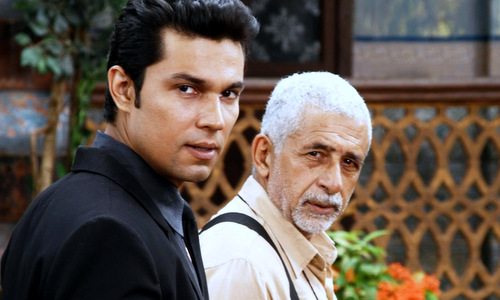
A cast of professional theatre actors, many of them regulars in Motley productions, lends another dimension to the script. Take the case of Randeep Hooda, playing a mysterious figure impeccably turned out in black suit and neatly brushed hair, who makes an unexpected entrance into Anton’s studio and refuses to leave without making an impression. His winsome personality, broody eyes and half-smile quirkily mix intellect, mischief and cynicism. The subtext of a protégée giving his mentor life-lessons––Hooda has often performed on stage under Shah’s tutelage––renders their exchanges tantalising.
Set in an idyllic Goan village where time has come to a standstill (you happily register the complete absence of modern contraptions), the Gomes' universe is peopled by old friends and familiar patterns. Anton hangs out at the tea stall with Jose (Benjamin Gilani). Bella has a regular visitor in an old friend (Mahabanoo Mody-Kotwal), a fidgety, deeply unhappy woman longing for the sons who have forsaken her even as she puts up airs of false cheer. It's a tight-knit community in which everyone necessarily meddles in each other’s affairs, but not in harmful ways. So that if a man takes his wife out for dinner without occasion or even gets his house painted, it becomes fodder for gossip.
Like the Chekhovian hero he is, Anton must undertake a decisive journey and re-evaluate his life even to its peril. His transformation is Shah’s triumph. Much as he explodes with impotent rage in the earlier portions (and forgive me for reading too much, but how often have we heard him fume about mainstream Bollywood and his erstwhile collaborators from parallel cinema?), he gradually turns inwards. Things are left unsaid, doors are opened, and the consummate actor finally breaks through chequered recollections of recent history to convey shifting moods by the mere flicker of his eyes or changing shades on his face.
In the end, Bakshi’s miraculous little film transcends its own boundaries to set free a man trapped in the mediocrity of his surroundings nearly to be point of being devoured by it.


Comments