


 REVIEW: Aajcha Divas Majha
THE BLIND SINGER AND THE JUST KING
In the summer of 1996, as a rookie journalist, I went to Aurangabad and Latur on the campaign trail for the Lok Sabha elections. At a rally addressed by Sharad Pawar and Vilasrao Deshmukh in Latur, there was a youngish, weary-looking woman of modest means sitting cross-legged at the front of the gathering, right next to where I was. While the political speeches continued, the nervous woman kept rolling a piece of paper in her hand wondering how to approach the dais and hand it to one of the leaders. Eventually she mustered courage and reached out to Mr Pawar who distractedly took the paper and kept it with him for the duration of the function. When he was leaving, he tossed a quick glance at it before casually letting it slip from his hand and walking off. The young woman had already left by then, perhaps carrying with her the hope that one of these great men would pay heed to her grievance and alleviate her suffering.
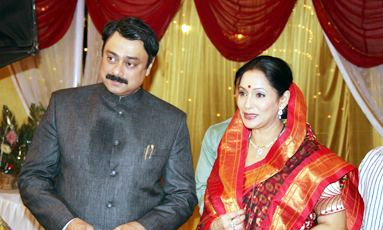
There’s a similar moment in Chandrakant Kulkarni’s well-intentioned but uneven film Aajcha Divas Majha involving the fictional Chief Minister of Maharashtra, Vishwasrao Mohite (Sachin Khedekar), but this time at a much smaller, private gathering––the wedding of a retired judge’s son. As the rest of the elite guests rise from their chairs when the CM arrives, one gentleman stays seated with his face turned away. Mohite, back from a triumphant trip to Delhi to retain his top spot earlier in the day, is incensed by this man’s impudence and makes a dismissive remark about it. The host gently informs him that perhaps he missed noticing the man is blind and was unaware of the dignitary’s presence.
When introduced however, the blind man, a singer of only moderate success, greets him with utmost respect and as he shakes his hand, slips an envelope to him. The CM, unnaturally affected by this episode, reads the contents of the singer’s brief letter and realises he has been denied government housing despite a pending application from eight years ago. As CM it's within his powers to remedy this lapse, literally overnight, and the film traces how.
In some ways, Aajcha Divas Majha carries forward the same liberal-idealist ethos that Kulkarni and his writers Ajit and Prashant Dalvi espoused in their last film, Tukaram, the inspiring journey of an ordinary landowner’s son to becoming a great saint-poet. The possibility of goodness and transformation exists in everyone, crafty politicians included. But unlike Tukaram, which had a real resonance for modern life, this one is cast purely as a morality tale. The crisis is so small, it is well within the capacity of the writers to resolve it without too many hurdles. Which gives the film a neat resolution, but doesn’t churn the mind beyond the obvious metaphor of the blindness of the state to the woes of its subjects and a sentimental call to its collective conscience.
What works, on the other hand, are smaller characters, such as a Mantralaya clerk who is woken up in the dead of the night to type out the order of the singer’s flat allotment and the lengths to which he goes to shun this duty arguing that firstly he doesn’t get paid enough to justify such dedication, and second that Mantralaya, the seat of power, is important precisely because of its ability to turn people away.
The film tackles the power struggle between the legislature and executive wings of government with reasonable success. Early in the narrative, Mohite speaks brusquely to the state DGP for cooking figures about women’s safety for an assembly debate. Later, he has a bigger, more explosive confrontation with an IAS officer called Rehmatpurkar (Mahesh Manjrekar) who is in charge of the housing department and hence must be summoned to carry out the CM’s peculiar orders.
The most interesting character though is the CM’s personal secretary and trusted aide, PD Shinde (Hrishikesh Joshi), who works as his shadow and articulates the film’s moral vision in a long telephonic conversation with his son. The boy has just passed his Board exams with flying colours and the father hasn’t had the time to congratulate him all day. Shinde talks affectionately to him, explaining the actual function of government and how fulfilling it is to do good to others without any ulterior motive. The son’s chest swells with pride within minutes and like the audience, he too gets a pat solution.
But Aajcha Divas Majha takes inordinately long to establish its theme and for the first quarter you are led to believe that it may be a political thriller about power-hungry leaders incapable of looking past their individual interests. Gradually you realise that Mohite, the smooth-tongued chameleon who can crush his opponents and challenge the authority of the state’s Governor in a face-off, also has a heart. Khedekar is the perfect candidate for this role because he swings so convincingly between being ruthless and feeling guilty and small. Much of the supporting cast, including Ashwini Bhave as the CM’s wife, is effective and some of the humour derived from the foibles of various cogs in the state machinery is genuinely funny.
And yet you emerge from Aajcha Divas Majha feeling only half-elated at the triumph of humanity because a literate audience (clearly the film’s target given its verbose exposition) is unlikely to buy into the Aesop’s fable-type remedy it offers for endemic crises way more complex than its limited scope can tackle.


very nice movie. very well done. Quite touching in few moments. Worth seeing. The character PD Shinde is very well presented. Sachin Khedkar offcourse well talented actor.
Posted by: Diwakar | Apr 07, 2013 at 18:23
One of the finest movies I have seen. One overwhelming moment in the film for me was when CM explains to his wife as to why this is not a small deal after she tells him to go easy as it was an inadvertent mistake. Here he regrets why he was incesed that an ordinary pay him heed. Also talks about the power and ego that comes with it.
Posted by: Milind Adpaiker | Apr 02, 2013 at 15:49