


 NOSTALGIA: Motilal
THE GENTLEMAN
Motilal Rajvansh is credited with being among Hindi cinema’s first natural actor actors. At a time when stars like Prithviraj Kapoor and Sohrab Modi relied on theatrical performance, Motilal breezed in with his modern sensibilities and paved the way for actors like Dilip Kumar to emulate his stylised sophistication.
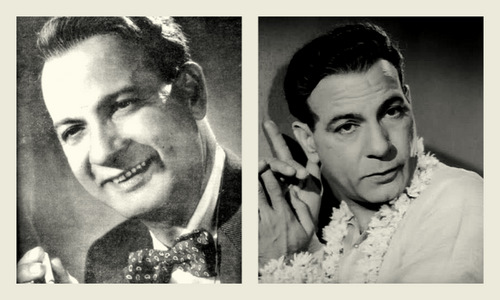
Born in an affluent Shimla family in 1910, Motial started his career with Shaher Ka Jadoo (1934) at the Sagar Film Company and featured in many successful social dramas alongside Sabita Devi such as Dr. Madhurika (1935) and Kulvadhu (1937), and later switched to Ranjit Studios. At Ranjit, Motilal worked with Mehboob Khan (Jagirdar (1937), Hum Tum Aur Woh (1938), Taqdeer(1943)) and Kidar Sharma (Armaan (1942), Kaliyan (1944)). Perhaps his most famous role was that of the gentleman crook in S S Vasan’s adaptation of R K Laxman’s book Mr Sampat (1952). Motilal earned much praise for his comic timing and his stylish rendition of the protagonist who lives by his wits.
But it was his flamboyance that also brought about his downfall. Motilal was fond of horse racing and living the good life and had lost most of his money by the 1950s. In the later part of his career, he essayed a handful of memorable character roles in Bimal Roy’s Devdas (1955) - as the protagonist’s pleasure-loving, city-bred friend Chunilal who leads him to the brothel; Shambhu Mitra’s Jaagte Raho (1956) in the popular song “Zindagi khwab hai” sung by Motilal’s cousin Mukesh; and Hrishikesh Mukherjee’s Anari (1959), as the ruthless pharmaceutical manufacturer Ramnath.
In the late-1940s, Motilal launched into a tempestuous relationship with actress Shobhana Samarth. The mother of actresses Nutan and Tanuja, Samarth described him thus in an interview given towards the end of her life, “He resembled my father in many ways - the way he walked, the way he talked, the way he held his hat, his generosity, his principles... Everything about him resembled my father so much that I couldn't stop loving him.”
Motilal turned director with Chhoti Chhoti Batein (1965) and died the same year.


Comments
You can follow this conversation by subscribing to the comment feed for this post.