


 INTERVIEW: Bejoy Nambiar
MAN OF THE MOMENT
You liken Bejoy Nambiar’s debut film Shaitan to Amores Perros in terms of its existential sweep and he smiles self-consciously, “I’m humbled by the comparison.” It’s not the first time Bejoy has found himself in august company. As an absolute novice, he convinced Mohanlal to come to Mumbai to act in his first short film Reflections (2005). Just eight minutes long, it’s a compelling narrative with enough drama and visual finesses to have persuaded Mani Ratnam to hire him as an assistant on Guru and later get him to line produce his flawed epic, Raavan. Clichéd as it sounds Bejoy describes his stint with Ratnam as “being at university. The sheer scale and intricacies of his vision are astounding.” From there to getting Anurag Kashyap to produce Shaitan, was an arduous, but rewarding journey. The debutant fondly recalls all the heartache and meticulous planning that went into Shaitan, arguably 2011’s best film so far.
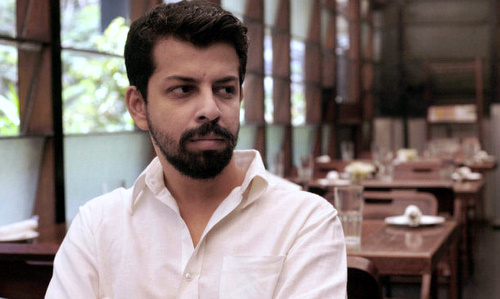
Nambiar: This year's breakout director
Shaitan is an unsual ‘Mumbai’ film. The city exists as a character, but not in the manner it is seen in most Hindi films. It’s one of the primary reasons that evoke the Amores Perros comparison. The city in conflict with its inhabitants…
It was an intentional decision to frame the city in a certain way, because it’s an essential character in the film’s drama. I wanted to shoot it from a different perspective and pick out unexplored places like Rohan Sippy did with Bluffmaster. That film was my reference for the look. I didn’t want to shoot at the regular locations seen in films, and even where I did use places like Mohamed Ali Road or Marine Drive I wanted to shoot them differently. My cinematographer Madhi also played a huge role in this process because he was filming in Mumbai for the first time, which helped us get an outsider’s perspective of the city.
Were you aware of the similarities between Shaitan and Anurag Kashyap’s unreleased Paanch? There is an uncanny resemblance, not just thematically, but also in terms of its existentialist vision and lament of urban decadence. Stylistically too both films are trying to push the barriers of the medium in their own individual ways.
I’ve been asked this question a lot and in fact when I first met Anurag he too asked me if I’d watched Paanch. Truth is, neither my co-writer Megha Ramaswamy nor I had seen Paanch. We still haven’t. My starting point was the Adnan Patrawala case. I’d written the rough draft of the script after I won the Gateway contest run by Sony Pix and went to LA to work with Ashok Amritraj. He asked me to work out any idea of my choice based on a true incident. I worked out 10—everything from the Bhopal gas tragedy to the ’93 riots and so on. Shaitan was then called Spiral and because everyone liked the concept a lot, I decided to flesh it out. Originally it was to be made in English with an American protagonist. But after Ashok withdrew from the project, we decided to turn it into a Hindi script and made Kalki’s character an NRI.
New kids on the block: The Shaitan ensemble
Did you ever consider casting stars for this film, or was it always meant to be an ensemble cast?
I’d approached Amitabh Bachchan for the part of the cop—we’d written an alternate version with an older cop and wanted him to play the character. But it didn’t work out. I also approached Sanjay Dutt. In fact, the casting of Shaitan was a long-drawn process because we didn’t have a producer in place and the actors I’d chosen weren’t in a position to wait around endlessly. But Kalki, Shiv and Keerti were there from the start. Gulshan and Neil came in later. And Anurag helped me get Rajeev Khandelwal and Pawan Malhotra.
Can you elaborate on Shaitan’s visual design?
I had so much time to prepare for the film that by the time we started shooting I knew exactly what I wanted. For instance, the introduction scenes for all the major characters had been worked out much in advance. We had decided to shoot the entire film on actual locations, so not one shot has been done in a studio. And because we were shooting on digital, we knew we could work with really small cameras, which freed us up. We’d already decided to shoot the song 'Josh' on extreme high speed. We wanted to shoot the theatre sequence at the Nehru planetarium, but because we didn’t get the requisite permissions, we shot it at Navrang cinema instead. Eventually those kids watching a Bhojpuri film while on the run, worked out very well. The Govinda scene was shot even before the final casting was done. So Rajeev Khandelwal’s portions were punched in later. Many scenes surpassed my expectations and some fell short, but the church sequence at the end was done exactly the way it was written on paper. It was bang on.
What about the music? Was it a conscious decision to work with different composers?
Yes, it was something I’d decided right from the beginning. Like we prepped for the visual design, we were also preparing for the music. We wanted the music to be a collaborative effort because using a single composer limits the film’s aural perspective. So we got a different composer for each of the songs and Ranjit Barot for the background score.
What about the ‘Khoya khoya chand’ remix sequence which has received so much praise?
Originally we wanted to use the song ‘Lakdi ki kaathi’. But when we went to Mikey (McLleary), he suggested I listen to the stuff he had. Each song was better than the other. We kept putting the track on the scene—it was shot and cut beforehand—to see how it looked. We put ‘Ajeeb daastaan hai yeh’ and it looked nice, we put ‘Sama hai suhaana’ and it looked good, but finally, when we tried ‘Khoya khoya chand’, it just fitted like a glove. It actually looks like the scene has been shot for this song.
Kalki Koechlin: a perfectly framed performance
How did you convince Anurag Kashyap to produce the film?
I didn’t. I was only speaking to him about Kalki’s dates. I’d decided to shoot her portions because I’d wasted her dates a couple of times. So I planned a 15-day schedule with my own money, since there was still no producer in sight. Ten days before the shoot Anurag called me to the office and offered to come in as producer.
What role did he play as producer? Being a director of a certain sensibility, did he offer you any creative inputs?
Anurag was the best possible producer to have. He got me the money, put his name on the project and went all out to promote it. It got tremendous credibility because of his name. And yet, he was never involved during the making of the film. He just set everything up and took off.
How did he and your mentor Mani Ratnam react to the film?
Both liked it a lot. Anurag isn’t the kind to say nice things about something he doesn’t like. And Mani sir too went all out to praise the film, which was heartening for me.
Were there any apprehensions about running into trouble with the Censor Board?
It was always at the back of my mind that the censors might object. But beyond a point, you can't compromise on your content. I wanted to try and avoid shots of smoking as much as possible. But we have drug abuse in the film although we’ve limited those scenes as well—we show them snorting only twice. The violence is very graphic because we wanted it to leave an impact. Once the film was ready I was mentally prepared that some parts might be affected. Surprisingly the censors were very supportive. That one disclaimer from Anurag at the beginning helped me keep a lot of stuff.
Is it any easier doing your second film?
I’m working on it and because it’s a bigger production than Shaitan, am running into a familiar wall of resistance. If I were to make something on a similar budget as Shaitan, it would have been very easy to get finance. But because I’m attempting something which requires a larger scale, it is still a struggle. I think it’ll be a unique film because of its unconventionality. It is rooted in reality—that’s my sensibility. I can’t see myself doing a film with 15 background dancers at this point, although I enjoy watching such films. For now, I’ll try to stick to what I’m good at.
The DVD of Shaitan is now out in the market.


Comments