


 Google Talk: filmimpressionsgroup
 Twitter: filmimpressions

 REVIEW: We Are Family (3)
KUCH KUCH STEPMOM HAI
Siddharth Malhotra's We Are Family takes the already sexist plot of Stepmom and twists it further into a putrid patriarchal melodrama. In the original film, Julia Roberts, a successful photographer, needlessly juggles her professional life to bond with her fiancé Ed Harris' kids. Harris' ex-wife, Susan Sarandon works for a publishing house and takes pride in being super-mom to her relatively well-adjusted kids. She and Roberts play a ridiculous game of one-upmanship, while Harris is conspicuous by his absence, as though his role in his children's life is merely incidental. Then Sarandon discovers she's dying of cancer and decides to relinquish charge of her kids to the soon-to-be stepmom, Roberts.
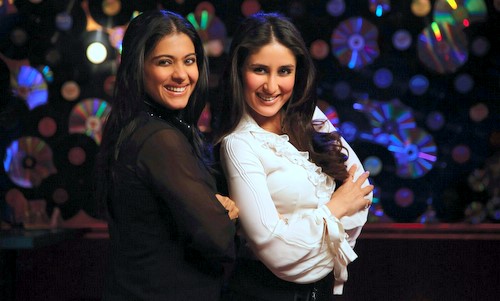
Contrast this with what happens in the Hindi adaptation. The Rampal-Kapoor romance is treated so inconsistently, they never seem like a couple in love and committed to each other. The minute Rampal finds out his ex has cancer, he instantly leaves Kapoor to go back to his family. Kajol never comes across as the self-willed, independent woman Sarandon is in the original. She's happy to have the ex-husband back and worse, invites Kapoor to stay with the family in order to take care of her kids. She too comes without knowing her status in the man's life. It would be an interesting exercise to count the number of times Kapoor apologies to various members of the family for her so-called inadequacies, but mostly for being a career woman ill-equipped for and disinterested in rearing someone else's children.
It is an age-old ploy in Hindi films to put one man and two women together under the flimsiest pretext and making both women equally subservient to the household, and in this case, three obnoxious children. Why kids in Hindi cinema are uniformly pesky is one of the great mysteries of the universe. As is our filmmakers' obsession with schizophrenic set-ups -- families who live abroad but speak chaste Hindi (including kids, who may have been born in the US or UK or Australia, but haven't the faintest hint of local accent), hollow, inconsistent narratives and characters who somehow strive to reiterate their so-called Indianness by upholding a regressive value system while living sinfully comfortable lives in the prettiest of places.
If there's anything that salvages the film somewhat, it's Kajol's endearing presence. Her performance hits the right notes a few times, particularly in the second half. But it's just too much watching her hand over her jewellery to Kapoor for her daughter's wedding and then, follow it up with an actual scene of the wedding itself, several years hence. All that was left to happen was for Kajol to jump out of the family photograph and have a teary reunion with her grown-up daughter while Kapoor benignly looks on!
Stepmom wasn't a great film by any stretch. It was a regular upper-class American three-hanky tearjerker, lacking in depth and entirely forgettable, but for Sarandon's and Roberts' spirited acts. What's left to say then for a film that cannot even measure up as a faithful copy of an already mediocre one?


Comments