


 REPORT: 12th Mumbai Film Festival Overview
 At high-profile international film festivals, a measure of the event's success (other than the films it manages to get, of course) is the star turnout. By that yardstick, the 12th Mumbai Film Festival which concluded last night, wasn't particularly impressive. Barring Prem Chopra who did the rounds at PVR almost everyday and gleefully signed autographs, sipped coffee and walked out of screenings, the star quotient was abysmally low. There were the lesser known actor-stars like Raghubir Yadav, Ranvir Shorey, Vinay Pathak, Rajat Barmecha etc. who queued up for the odd screening, and there were filmmakers -- Shriram Raghavan, Anurag Kashyap, Leena Yadav -- who'd turn up now and then.
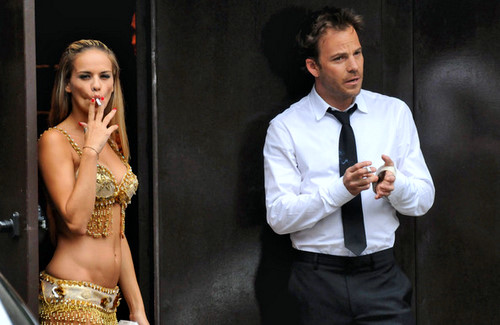
But that didn't irk as much as the uneven selection of films and the bizarre scheduling. Three highly anticipated films -- Aamir Bashir's Harud, Sofia Coppola's Somewhere and Aparna Sen's Iti Mrinalini were screened at the same time. Some of the popular screenings like Biutiful and Somewhere were held at smaller screens which led to disgruntled delegates fighting to get in. Shockingly bad films like Christina made it to the list when there could have been so many better contemporary features to choose from.
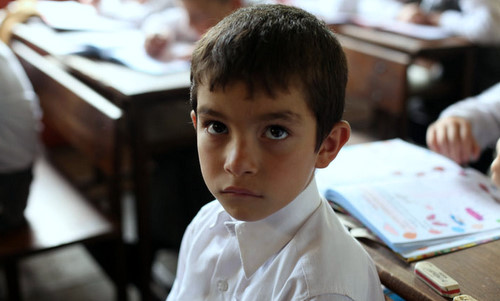
Then there were the hyped films that proved seriously disappointing. Foremost amongst them was this years Berlin Film Festival winner, Semih Kaplanoglu's Bal (Honey), a Turkish film about a little boy (Bora Altas, a precocious natural who makes the otherwise drab film somewhat bearable) and his father who gathers honey high up in the mountains. We see the boy, a slow learner at school (probably dyslexic) struggling to make an impression on the teacher. At home, the father is his bulwark against the mother's discipline. The father goes missing and the boy is lost and lonely. Problem is, very little actually happens in the film and you're left to marvel at the picturesque setting and the little boy who steals your heart with his big innocent eyes.
Amongst the films that made an impression was Argentinian film The Invisible Eye (Director: Diego Lerman) set towards the end of the dictatorial regime in the country from 1976-1982. Julieta Zylberberg stars as Maria, a young, stiff and repressed teacher in a school that prides itself on high standards of discipline. Maria carries out her duties diligently, wordlessly, with a hard, impassive face. But it's not possible for her to avoid developing a crush on one of her students. The film traces her furtive efforts to watch him, feel him, and experience the ecstasy of being around him; all done without betraying any emotion on her face, and always on the sly. A fascinating metaphor for life under a dictatorship, the film gradually builds up to a brutal climax that's as shocking as it's appropriate.
There's another kind of violence in Ken Loach's Iraq war testament, Route Irish. Always a politically conscious filmmaker, Loach's attack on the British and American activities in the occupied land is ruthless and precise. Fergus (Mark Womack) a mercenary working for large British contractors doing business in the ravaged country, loses his best friend Frankie in a bomb attack on Route Irish (dubbed the most dangerous road in Iraq). Fergus, angry and frustrated, launches his own private investigation into the death and stumbles upon a conspiracy that not just exposes a pre-meditated murder, but basically unmasks the arbitrary blood-fest launched by the western powers on Iraq.
Wang Xiaoshuai's (of Beijing Bicycle and Shanghai Dreams fame) new film Chongqing Blues is, expectedly, a superb reflection of urban angst. On more than one occasion you see the hazy Chongqing skyline as backdrop -- the city is a busy river port in the Sichuan province. A sailor has returned to his hometown to gather information about the death of his 25-year-old estranged son. He scours ugly, squalid tenements, crowded streets, drab hospitals and tacky nightclubs as he tries to piece together the puzzle of his son's bizarre stakeout at a local mall leading to a hostage situation and ultimately, his death. The film unfolds at a dreary pace, but perhaps the filmmaker did that deliberately, to get us to absorb the sheer wretchedness of this urban landscape and the isolation of those inhabiting it.
In stark contrast, Abbas Kiarostami's first film set outside Iran, Certified Copy, is shot against a classically resplendent Tuscan backdrop. The subject is the relevance of art, the value of truth versus imitation and the essence of marriage. The narrative faithfully reproduces the director's thematic concerns -- a little too literally, one thinks. British Opera singer William Shimmell (gorgeous looking, if a slightly stiff actor) plays James Miller, an author who's in Tuscany to release the Italian version of his book, Certified Copy, which argues that a copy of a work of art is as relevant as the original. Juilette Binoche (clever and charming) plays an unnamed woman who attends the press conference with her restless son, and later, invites Miller over to her basement antique shop. She takes him out for a drive and the film starts feeling suspiciously like Richard Linklater's Before Sunset. Halfway through though, Kiarostami adds a twist -- a woman in a coffee shop mistakes them for a couple and suddenly, Juliette's character plays along this charade. Soon Miller joins in and they start behaving like a real life couple jaded after 15 years of togetherness. By the end of the film, we can't tell for sure whether they're strangers or a couple -- which ties in neatly with the subject of Miller's book and indeed, Kiarostami's film.


Comments