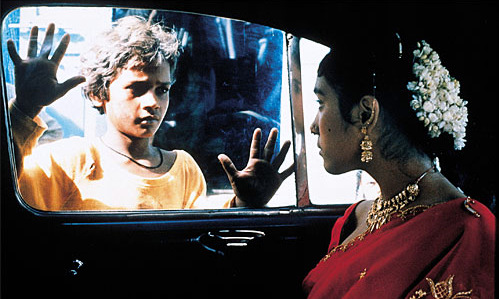
Mira Nair’s debut feature film Salaam Bombay which is celebrating its
25th anniversary this year and had a limited re-release last week,
begins like any other conventional film with an underdog hero. Young Krishna
(Shafiq Syed with a brilliant screen presence), barely 12 years old, is abandoned by his boss, the manager of a circus,
and left to fend for himself with hardly any money in his tattered pockets. He
walks up to the nearest railway station, asks for a “bade sheher ka ticket” and arrives in Bombay. In popular cinema
he’d have encountered kindly folk all around or stoked his angst to grow up as a
messiah for other lost souls like himself, either becoming a smuggler/pickpocket
or then, somehow managed to put together the 500 rupees he needs to take back
to his village in Karnataka before his mother will accept him back (he ruined someone’s
bicycle and has been sent off to make good the loss), his makeshift family
bidding him a teary farewell.
Shafiq Syed as Chaipau and Chanda Sharma as Sola Saal
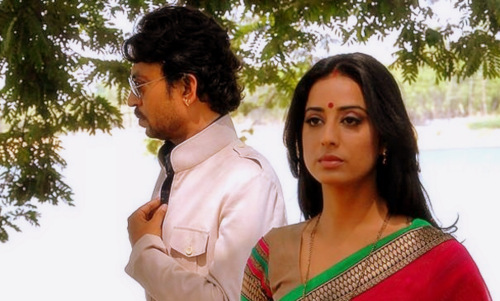
What do audiences take home from films like Saheb Biwi Aur Gangster Returns? I, for
one, came away with a headache. Tigmanshu Dhulia perhaps wanted to critique contemporary
India’s fungible moralities and the absence of valour even in blue-blooded descendants
of erstwhile princely states (of course he'd already done so effectively enough in Part 1, but still...). In a superb tragicomic scene the gangster (Irrfan Khan)
struggles with a rusty knife to pledge his blood towards restoring family honour
before the pockmarked bust of his ancestor. It’s unambiguous irony––among a few
such clever moments––but for those who’ve seen the film, it’s also a dead giveaway
that the SBAG franchise may even spawn
a third edition, particularly if reports of an encouraging box-office opening are
true. In a newspaper interview published last weekend Dhulia confessed that he
only made the film for commercial reasons.
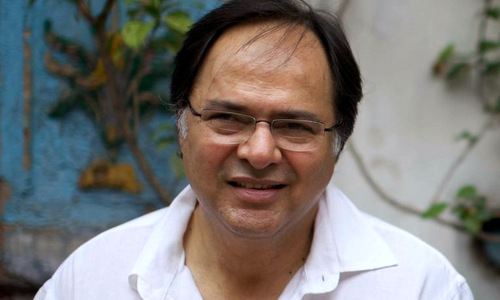
Last month I
sent Farooque Shaikh an impulsive message after watching his latest release Listen Amayafor the second time. It was
an uncharacteristic gesture and the idea was merely to compliment his work. Most actors don’t respond to smses from strangers. He did so
within minutes––a warm and courteous one in his unique shorthand which I
gradually learnt to decipher. Actors also don’t grant interviews to small-time
journalists who run obscure websites that few people read (especially if they
themselves are technologically challenged and don’t even know how to switch on
a computer). Yet I found myself at his house this week and ended up falling in
love with the man after a two-and-a-half hour marathon chat about everything
and nothing.
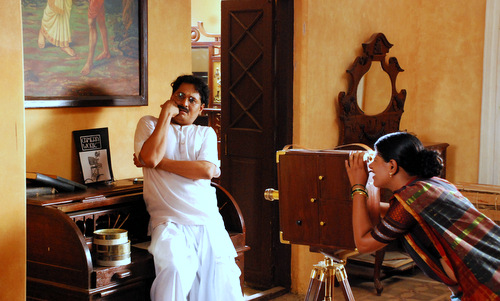
Till Paresh Mokashi made Harishchandrachi Factory (2009), all we
knew about Dadasaheb Phalke was that he directed India’s first fiction film Raja Harishchandra (1913) and there’s an
award named after him. Mokashi’s vision transformed this pioneering effort into
the adventures of a Chaplinesque hero obsessed with moving pictures and
prepared to stake everything to fulfill his impossible dream. Interestingly, Harishchandrachi Factory was bankrolled
by none other than UTV, a sure sign of the dramatic turnaround in Marathi
cinema after the remarkable success of a small (and not necessarily classic)
film called Shwaas(2004), which won
the National Award for Best Feature Film and literally breathed new life into
a floundering industry.
Nandu Madhav and Vibhavari Deshpande in 'Harishchandrachi Factory'
There is a human face to every tragedy––even
the most violent and horrific ones. A filmmaker has the right to choose his
stories and the points-of-view from which he narrates them. For
instance, Ramgopal Varma may have a greater fascination for the 10 terrorists
who landed in Mumbai on 26/11 than any of their victims or those who tried to
capture them. Fair enough. Then he must delineate the story from their perspective,
giving us a real sense of who these people were, where they came from and their
compulsions and motivations. Also how they lived through the ensuing carnage. What
instructions did their handlers give them while the attacks were underway? How
did they cope with the tension and the uncertainty? Was there any regret,
remorse or fear? And ultimately, after nine of them died and Ajmal Kasab was
captured alive, what transpired till the time he was hanged?
Kai Po Che wouldn't be
the first Hindi film to fail the Bechdel Test for Women in Movies.
Spectacularly too. Nor would it be the last. Male-bonding and undying love
between the boys is one of our most enduring themes. But Kai Po Che is a good place to start
applying the Bechdel to our cinema. The test involves asking three basic
questions––1) Are there at least two women characters in the film with
distinctive names (which means they are identifiable as individuals and not
just as Ma, Behna, Bitiya etc.), 2) Do these women talk to each other (if they
share screen time it means they are relevant enough to the screenplay as
individuals, as is their relationship with each other) 3)
Do they talk to each other about anything except the men in their lives (to gauge if their existence has any importance beyond their relationships with
men)?
Despite its thoroughly
entertaining exposition and great period detailing (how I’d love going back to
the computer/mobile-free ‘80s with just two state-manufactured cars, HMT
watches and all the inconveniences of the License Raj! But that’s misplaced
idealism too…), something about Neeraj Pandey’s Special 26 left me feeling disturbed.
In the run-up to the centenary of Indian cinema, in this Film Impressions special feature we take a look (through an extensive photo-feature and an accompanying essay) at all the women from the Indian film industry who have been decorated with state honors, and what this cross-section of diverse talent tells us about our cinema.
FOR COMPLETE PHOTO FEATURE READ IN MAGAZINE LAYOUT BELOW
I’ve always
believed that Marathi cinema is miles ahead of its big brother in terms of
content and performances, and displays the courage to tackle diverse subjects
without shying from the truth. Often, what keeps it from attaining heights of
cinematic greatness is the paucity of funds resulting in inconsistent visual
appeal. Some directors work in television and make movies at the same time and
their framing techniques and use of spaces are often the same for both media.
Satish Rajwade is one such filmmaker, full of ideas about relationships and their quirks, gently tickling the funny bone while addressing nuances of contemporary
urban life without seeming preachy.
Millions go
to the cinema to watch the likes of Salman Khan in trashy movies week after
week, year on year. Some of us have waited decades to see Farooque Shaikh play
the lead in a film. Just to hear the man say, "I love you" to his
longtime screen companion Deepti Naval is well worth the price of a ticket for Listen Amaya. Why? Because when he speaks,
the feeling gushes to the surface effortlessly and transcends the stagey atmosphere of this film.