


 REVIEW: Deool
THE GODS MUST BE CRAZY
Umesh Kulkarni has a sharp sense for satire (evident in his directorial debut Valu a few years ago). As does Girish Kulkarni, who has penned the script and screenplay of Deool. Together they display a keen understanding of complex social issues and for the first half of its running time, Deool is an absolute riot. It's crisp, witty, thought-provoking and moving. The idea of the village simpleton Kesha (Girish Kulkarni) getting a vision of lord Brahma while napping under a tree on a hot summer afternoon and the mayhem it unleashes isn't highly original. You know what to expect. The innocent protagonist goes around telling people about his experience without anticipating its consequences.
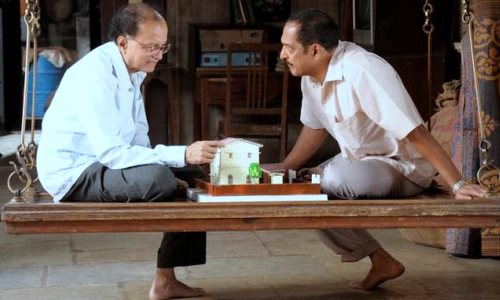
Various elements in the village seize the opportunity and before long there's a temple, where they may have been a hospital that the community badly needs. The local politician Bhau (brilliantly hammed up by Nana Patekar along with Sonali Kulkarni who plays his wife), his subordinates and rivals, the media, the schoolteacher and just about everyone else jumps onto the bandwagon and prosperity finally arrives. The only person who chooses to walk away from it is a relatively well-to-do literate man called Anna (Dilip Prabhawalkar), who first floated the plan for the hospital.
While the film is clearly taking a stance against the mindless pursuit of capitalism and religion and the opportunity both offer for ruthless scavengers of all hues (chiefly politicians) ultimately leading to depravation, it also accepts that but for such sensational accidents (such as god gracing a village), prosperity is still a distant dream for most of rural India. But does any village (or city) really need television soaps, loudspeakers blaring all night long and steadily growing mounds of plastic and other garbage which arrive with the hoards the temple attracts? And what of the poor cow, who gets caged for 'darshan' while its owner (Kesha) too is barred from seeing it when VIPs are on site?
If dehumanisation is the price of development, is it really worth it?
On the other hand, even while the village is plunged in darkness at the beginning of the film, there's enough connectivity for local boys to watch pornography and drink merrily into the night. What 'development' does is, it brings out the worst in a larger number of people than it earlier managed, while apparently empowering them. The rubber-stamp local sarpanch is a telling example. Earlier, she's bullied by her mother-in-law and Bhau, and is forever cowering in submission. But as she tastes power, her mother-in-law becomes a worthy ally in the money-making game.
Brilliantly acted, Deool is marred by a dragging second half—much of what the director wants to say about the unholy nexus between organised religion, politics and globalisation has already been dealt with effectively in the first—which becomes repetitive. 30 minutes shorter and it could have been a hard-hitting punch. But even with its excess—and an unforgivable item number (did we really need to see it to know that proliferation of sleaze is a part of the show too?)—it's an important film, not worth missing.


Comments