POP SECULARISM
Aaj Rang Hai, from T-Pot & Aarambh Productions, is a delightful melodrama that has recently completed twenty odd performances all over the country. It is the story of two women, Beni and Phuphi, who struggle with fostering Hindu-Muslim amity in their locality in a time when more sectarian notions have rapidly gained ground. Set ostensibly in the 60s, the play has a contemporary resonance, even if it doesn’t quite address the reality of the parallel cultures that make up the modern Indian ethos.

Continue reading "ESSAY: The World of Aaj Rang Hai" »
VEER TOWARDS QUEER
This article was first published in Mid-Day (7th Jan 2011)
Urban theatre in Mumbai has always prided itself as being a few steps ahead of the game, in terms of how progressive texts have been traditionally embraced within this space. Homosexuality is being gradually eased out of the closet in India. The world of cinema has grappled with this by serving up an array of propaganda pieces that have tried to educate and sensitize the mass-audience that such multiplex fare mistakenly believes it has at its disposal. The world of theatre, by contrast, is a parallel universe that caters to a niche—what its practitioners believe to be a well-read bunch of people already firmly ensconced in a liberal ‘bubble’— but nonetheless, even this insular, impervious world has been waking up to the possibilities of a new kind of representation, and more and more plays have been staged this year either with overriding or subtextual gay themes, or prominent characters who are queer.

Continue reading "ESSAY: Queer Themes in Mumbai Theatre" »
HAMLET WITH CLOWNS
In Hamlet The Clown Prince, Rajat Kapoor presents us with an assured piece of theatre that combines comic farce with an ostensible element of tragedy through the performing of Shakespeare’s Hamlet in a play within the play by a set of rambunctious clowns with joie de vivre to spare. The promotional literature advertises the play’s selling point as that it is delivered in something called ‘gibberish’ (and some say it’s Hebrew, and others Yiddish—all kinds of rumors abound). This is a misnomer. There is a natural flow of query and response understood and spoken by the denizens of this realm. They get each other, there is a constant back-and-forth and verbal scuffles that could teach almost anyone a thing or two about oneupmanship. The characters don’t spend any time trying to make sense of the proceedings. Neither do we, we dive straight in, the concocted phrases become second nature, nothing ever descends into meaninglessness. It’s all very clever, and words need to sometimes come garbled across in what appears to be an effortless spiel. Therefore 'gibberish' is not quite the right epithet.
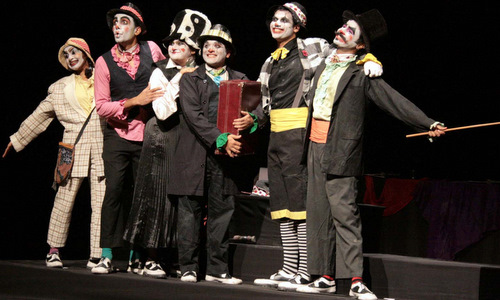
Continue reading "ESSAY: The Paradox of Mass Hypnosis" »
No theatrewala wants to be told that the stage is just a stepping stone for films and TV. Still, it is generally accepted that most graduates from the National School of Drama take the first train (or flight) out to Mumbai… and not all of them come here with the noble intention of enriching Mumbai’s theatre.
Any evening, the Prithvi Café is chock-a-block with theatre actors, at least some of them hoping to be discovered by Anurag Kashyap (you can spot any number of Prithvi hangers-outs in his films) or a TV talent scout. Now some of them regularly pop up in mainstream films as the hero's buddy, and almost all of them do an occasional serial to pay the rent.

Continue reading "ESSAY: Why Theatre?" »


Recent Comments