Film Impressions

  • REVIEWS
  • ESSAYS
  • INTERVIEWS
  • NOSTALGIA
  • PHOTOS
  • REGIONAL
  • INDEPENDENT
  • THEATRE

Search

ESSAY: Of Franchise Films And The Dilemma Of Dissoluteness

ON WATCHING SAHEB BIWI AUR GANGSTER RETURNS

What do audiences take home from films like Saheb Biwi Aur Gangster Returns? I, for one, came away with a headache. Tigmanshu Dhulia perhaps wanted to critique contemporary India’s fungible moralities and the absence of valour even in blue-blooded descendants of erstwhile princely states (of course he'd already done so effectively enough in Part 1, but still...). In a superb tragicomic scene the gangster (Irrfan Khan) struggles with a rusty knife to pledge his blood towards restoring family honour before the pockmarked bust of his ancestor. It’s unambiguous irony––among a few such clever moments––but for those who’ve seen the film, it’s also a dead giveaway that the SBAG franchise may even spawn a third edition, particularly if reports of an encouraging box-office opening are true. In a newspaper interview published last weekend Dhulia confessed that he only made the film for commercial reasons.
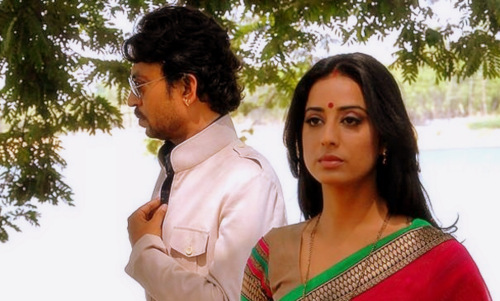
Saheb Biwi Aur Gangster Returns

Continue reading "ESSAY: Of Franchise Films And The Dilemma Of Dissoluteness" »

Deepa Deosthalee | Permalink | Comments (0)

|

INTERVIEW: Namrata Rao (Part 2)

Continued from Part 1

DD: When you go from working for Dibakar Banerjee to a Yashraj film like Band Baaja Baraat, is there a shift in sensibilities?

NR: Oh yes. There is a huge change. I was coming from LSD where we were about to change the world and all that. With BBB I was wondering what I would do. They had songs and I’d never edited songs before. I decided to take it all as an experience. I like to work with interesting directors because if they are as passionate about making a good film then the story or the genre doesn’t matter. I just went with my gut feeling after Maneesh Sharma narrated the script to me in a very interesting way. I had trouble adjusting only for the first few days.

Namrata Rao

Namrata Rao on the sets of one of her films

Continue reading "INTERVIEW: Namrata Rao (Part 2)" »

Deepa Deosthalee | Permalink | Comments (0)

|

ESSAY: Honor Killings in Indian Cinema

ZAN ZAR ZAMEEN

‘Hai maujazan ek kulzum- ekhoon kaash yahi ho
Aataa hai abhi dekhiye kya kya mere aage’

(There are waves in the turbulent sea of blood I wish it does not go beyond this Who knows what one might have to witness in the future).

This is a couplet by Mirza Ghalib that was quoted in the landmark Supreme Court ruling in May 2011, which decreed honor killings as those rarest of rare circumstances in which capital punishment was wholly warranted. This is a marked change from the kind of tacit silence that authorities have usually maintained on such practices in the past, as has Bollywood’s cinema of escapism, except until recently.

In Love Sex Aur Dhoka, Dibakar Banerjee lets his rather maverick lens witness the honor killings of two young lovers, something that hasn’t usually been depicted so starkly in a film culture where miles of film-reel have otherwise been dedicated to ‘izzat’ or ‘abroo’ and complications thereof. While much of the film is niftily edited and relies upon intrepid splicing of shots from several cameras, with all the hand-held jerkiness we've grown to expect from the cinema vérité techniques that Mr Banerjee appears to have mastered—the murders here are framed in chillingly still fashion. The footage is raw, the camera has been thrown to the ground, no-one helms it. The fact that it’s kept running owes itself to the lead protagonist’s penchant for exhibitionism (he’s a trainee film-maker), but this is a brand of found footage that does not necessarily fit in with the film’s overriding theme of deliberate and intrusive voyeurism. 

Anshuman Jha & Shruti as the doomed lovers in Love Sex and Dhokha

Continue reading "ESSAY: Honor Killings in Indian Cinema" »

Vikram Phukan | Permalink | Comments (9)

|

REVIEW: Love Sex Aur Dhoka

VOYEURS ALL

Dibakar Banerjee hit on a terrific idea—people are so hooked on to reality TV, why should they not be fed reality cinema too? He uses the 'mockumentary' style to tell three stories—cleverly interconnected—that try to capture a slice of North Indian life, with brutal frankness. Love Sex Aur Dhoka has one foot in the world where honour killings still take place, and one in which pornography is avidly consumed by ordinary people; there are sting operations by a sensation hungry media, and 'compromises' demanded from showbiz-obsessed girls, by lechy pop stars.

Harry Tangri pitches in an audacious turn

Continue reading "REVIEW: Love Sex Aur Dhoka" »

Deepa Gahlot | Permalink | Comments (0)

|

REVIEW: Love Sex aur Dhokha (2)

CONSUME WITH CAUTION

Dibakar Banerjee’s third film, Love Sex Aur Dhokha, a.k.a. LSD, is, in many ways as inventive as Khosla Ka Ghosla and Oye Lucky, Lucky Oye. Cannily shot and superbly acted by a bunch of newcomers, this film deserves to be seen by a society that’s mindlessly accepting digital images through various media, without understanding the implications of its voyeurism. Irony is, LSD too may end up becoming a just vehicle of titillation instead of invoking revulsion, as I presume, the director intends it to, if the audience doesn’t receive it with sensitivity.

A take-off on Dilwale Dulhaniya Le Jayenge gone awry

Continue reading "REVIEW: Love Sex aur Dhokha (2)" »

Deepa Deosthalee | Permalink | Comments (0)

|

PROFILE: Cinematographer Nikos Andritsakis

IN SEARCH OF NEW IMAGES

Dibakar Banerjee’s Love Sex aur Dhokha a.k.a. LSD is India’s first major digital film. Much of the credit for its authentically tacky look goes to young Greek cinematographer Nikos Andritsakis, whose brief was to make amateurish and shaky footage look aesthetic. “When I first met Dibakar, he showed me some low-grain porn videos from YouTube. And that was all the reference material we had,” Nikos laughs. From there to designing a distinctive look for each of the three stories of LSD was an exciting journey. “The first story is the video diary of an amateur filmmaker. So we used shots from his film, which is why the footage is unframed and quite gritty. The second is a story in a supermarket seen through the store’s CCTV cameras, so we have wide, high-angle zshots. The third story has a hidden camera in someone’s vest or bag because it’s a sting journalist’s story.”

With director Dibakar Banerjee on the sets of Love, Sex aur Dhokha

Continue reading "PROFILE: Cinematographer Nikos Andritsakis" »

Deepa Deosthalee | Permalink | Comments (3)

|

Recent Posts

  • REVIEW: Qissa
  • ESSAY: Alternative Women of Cinema
  • ESSAY: Mary Kom, From Book To Screen
  • REVIEW: Mardaani
  • REVIEW: Dishkiyaoon
  • REVIEW: Youngistaan
  • ESSAY: On Ankhon Dekhi and Nebraska
  • REVIEW: Bewakoofiyaan
  • ESSAY: 'Queen' And The Birth of A New Heroine
  • ESSAY: Fandry And The Question of Social Inclusion

Pages

  • INDIE BUZZ: Anup Singh's Qissa
  • EVENT: Re-release of Garm Hava
  • TRIBUTE: Sadashiv Amrapurkar
  • MAMI VERDICT: Chaitanya Tamhane's Court
  • VENICE BUZZ: Chaitanya Tamhane's Court
  • TRIBUTE: Zohra Sehgal
  • COVERAGE: The World Before Her
  • TRIBUTE: Nanda
  • BUZZ: Miss Lovely
  • CULT CLASSIC: Om-Dar-Ba-Dar
  • TRIBUTE: Farooque Shaikh
  • TRIBUTE: Sukumari
  • INDIE WATCH: Valley of Saints
  • INDIE WATCH: Ship of Theseus
  • INDIE WATCH: Shahid

Enter your email address:

Delivered by FeedBurner